The 20-Minute Sunday Money Reset We Kept
A weekly reset should close loops, not open a second job.
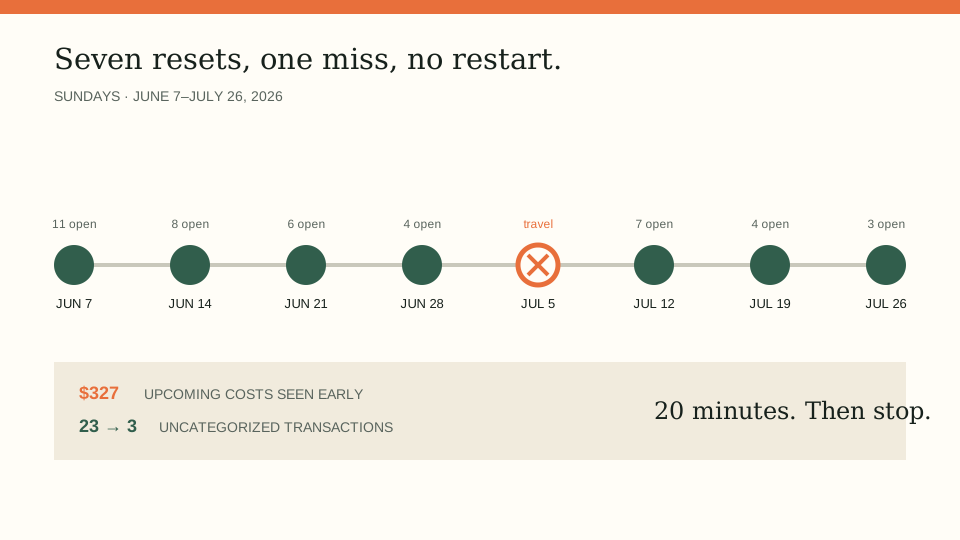
Our Sunday money reset lasted because it ended at 20 minutes. Across eight weeks, we completed seven sessions, reduced uncategorized transactions from 23 to 3, caught $327 in upcoming irregular bills, and entered Monday with one shared action. The checklist worked only after we removed investing, research, and budget redesign.
On Sunday, June 7, 2026, we set a kitchen timer for 20 minutes and opened the budget together. The aim was not a perfectly reconciled financial life. It was to make Monday unsurprising. Eight weeks later, we had completed seven resets, skipped one during travel, and kept the same timer.
Our previous “weekly money meeting” had no defined end. It drifted into mortgage rates, retirement projections, and whether a three-year-old subscription was philosophically worthwhile. Both people began avoiding it. The reset is smaller: clear recent traffic, look seven days ahead, and choose one action.
The checklist, minute by minute
- Minutes 0–5: approve posted transactions and fix only obvious categories.
- Minutes 5–8: compare checking and card balances with source accounts.
- Minutes 8–12: scan bills, subscriptions, and income due in the next seven days.
- Minutes 12–16: check three flexible categories: groceries, dining, and household.
- Minutes 16–19: move money only when an upcoming charge makes it necessary.
- Minute 20: write one owner, one action, and one date; then stop.
“Fix only obvious categories” is a deliberate escape hatch. A $42.18 store transaction could be groceries, household supplies, or both. If neither person remembered, we left it for the receipt rather than spending five minutes guessing. The reset handles what is knowable now.
Eight weeks, including the miss
| Date | Minutes | Uncategorized after | Upcoming cost caught | One action |
|---|---|---|---|---|
| June 7 | 20 | 11 | $96 insurance | Move $100 Friday |
| June 14 | 18 | 8 | $0 | Pause home spend |
| June 21 | 20 | 6 | $129 annual fee | Call issuer Monday |
| June 28 | 17 | 4 | $42 school gift | Buy by Wednesday |
| July 5 | — | 23 | — | Travel; skipped |
| July 12 | 20 | 7 | $60 utility rise | Adjust category |
| July 19 | 16 | 4 | $0 | Cancel duplicate storage |
| July 26 | 15 | 3 | $0 | Schedule savings |
The July 5 miss is the most important row. We returned from travel late and declined to perform a resentful reset. Uncategorized transactions rose to 23, but the next session still ended at 20 minutes. Seven items remained unresolved. By July 19, the normal rhythm was back.
What the reset caught
The $327 in upcoming irregular costs consisted of a semiannual insurance installment, a card annual fee, a shared gift, and a higher seasonal utility bill. We paid three. We called about the $129 fee on June 22 and received a product change to a no-fee card. That outcome was not guaranteed, so we count the reset as creating time to decide, not as automatically saving $129.
The reset also surfaced a duplicate $9.99 cloud-storage plan. Canceling it saves $119.88 over the next 12 months. That smaller, recurring improvement is exactly what a steady review can find better than a dramatic annual overhaul.
The rules that protected 20 minutes
Investment performance was banned. So were insurance comparisons, tax projections, travel planning, and any purchase requiring research. Those topics went onto a separate monthly list with an owner. We also agreed that the reset could not become a trial about who spent what. The numbers were shared information, not evidence for a case.
When a category was over, we asked one neutral question: “Does something need to change before next Sunday?” Sometimes the answer was no. A birthday week can be expensive without requiring seven days of austerity. A useful budget describes reality before it attempts to improve it.
App, spreadsheet, or paper?
We used Monarch because household logins and rules shortened transaction review. Our 42-day Monarch Money review explains the tradeoffs. Simplifi’s Spending Plan is also well suited to a quick cash-flow reset; see the Quicken Simplifi review. A spreadsheet works if balances and upcoming bills are easy to reach.
The tool matters less than the sequence. If setup consumes the whole session, simplify the account list or do a one-time cleanup outside the weekly reset. The repeated version should not require building the cockpit before every flight.
Our eight-week verdict
We kept the reset on August 2, 2026, the first Sunday after the diary ended. It took 14 minutes. The financial result was modest: one fee challenged, one duplicate canceled, four irregular costs made visible. The emotional result was larger. Monday stopped carrying a vague sense that something financial had been forgotten.
If daily attention feels better, our 7 a.m. money routine tests a five-minute alternative. Do not adopt both at once. Choose the smallest cadence that catches problems while they are still cheap, and let a missed session be a missed session rather than a verdict on the system.
The 20-Minute Sunday Money Reset We Kept FAQ
What belongs in a weekly money reset?
Review recent transactions, verify key balances, scan the next seven days of bills and income, check a few flexible categories, and assign one dated action.
What should stay out of the 20-minute reset?
Keep investing, insurance shopping, tax planning, major purchase research, and full budget redesign on a separate monthly list. They can consume the entire session.
What if we miss a Sunday?
Resume at the next planned time and keep the same limit. Do not double the session to repay a habit debt; unresolved items can move to the next week or a separate cleanup.
Editorial note: This article reports a limited household test, not a universal spending rule. See how LedgerLark tests and edits.